
Blog
Semaglutide Dosage Chart
Feb
Semaglutide Dosage Chart: Complete Weekly Dosing Schedule, Results Timeline & Safety Guide (2026)
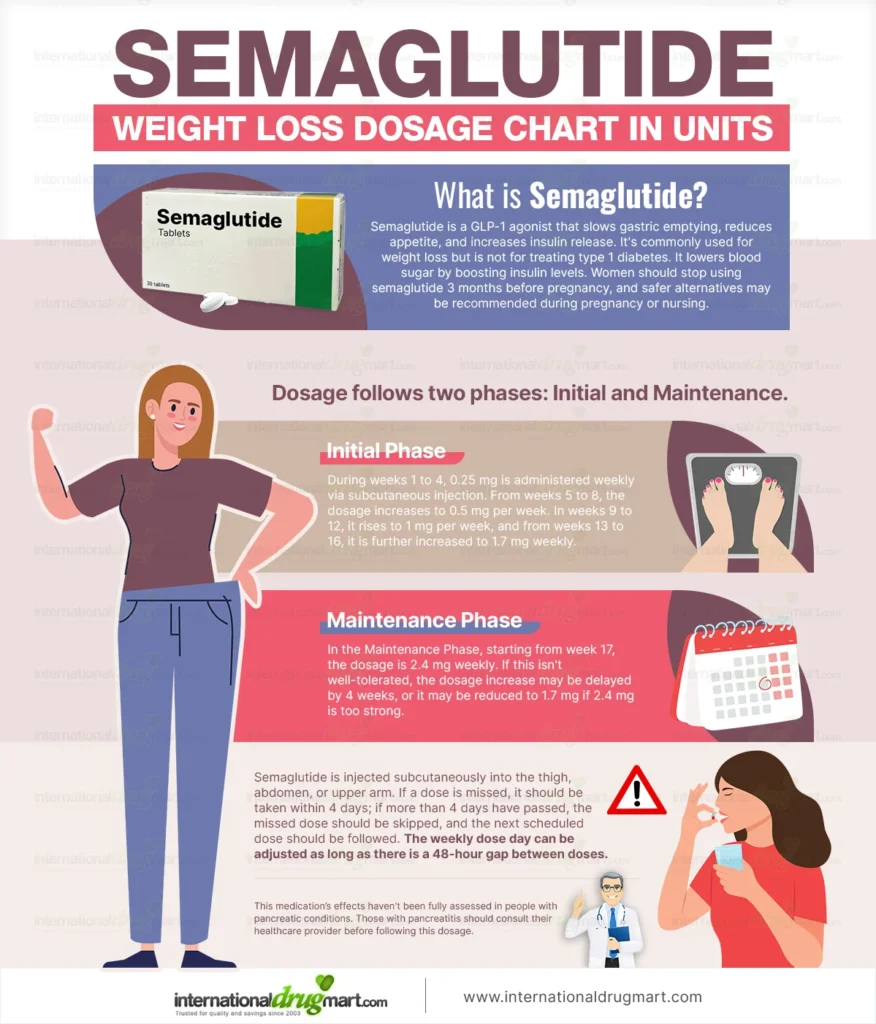
Semaglutide dosage typically starts at a low weekly level and gradually increases over several weeks to improve tolerance and effectiveness. This step-by-step increase, called titration, helps the body adjust and reduces side effects. Most semaglutide dosing schedules follow four phases: starting, adjustment, active, and maintenance, with each phase lasting about four weeks.
What Is Semaglutide?
Semaglutide is a GLP-1 receptor agonist originally developed for blood sugar regulation and metabolic health. It works by mimicking a natural hormone that regulates:
-
Appetite
-
Food intake
-
Digestion speed
-
Blood sugar balance
Semaglutide-based medications were developed by Novo Nordisk and approved by the U.S. Food and Drug Administration for specific medical uses under prescription supervision.
Today, semaglutide is widely studied for:
-
Appetite control
-
Weight management
-
Metabolic improvement
Complete Semaglutide Dosage Chart (Weekly Schedule)
Below is the standard semaglutide dosage progression structure used in clinical settings.
| Phase | Weekly Level | Duration | Purpose |
|---|---|---|---|
| Starting Phase | Initial low level | Weeks 1–4 | Body adjustment |
| Adjustment Phase | Increased level | Weeks 5–8 | Improved tolerance |
| Active Phase | Moderate level | Weeks 9–12 | Visible progress |
| Maintenance Phase | Target level | Week 13+ | Long-term results |
This gradual increase is essential for:
-
Reducing unwanted effects
-
Improving comfort
-
Supporting consistency
Why Semaglutide Dosage Increases Gradually
One of the most important principles in any semaglutide dosage chart is gradual progression.
This process is called dose titration.
The reasons include:
1. Improved Tolerance
Your digestive system needs time to adapt.
Gradual increases help prevent discomfort.
2. Reduced Side Effects
Slow progression lowers risk of:
-
Nausea
-
Digestive discomfort
-
Fatigue
3. Better Long-Term Results
Consistency matters more than speed.
Slow increases improve adherence.
Semaglutide Weekly Dosing Schedule Explained
Semaglutide follows a once-weekly schedule.
Key principles:
-
Same day each week
-
Consistent timing
-
No skipping weeks
Example schedule:
Monday: Weekly dose
Next Monday: Next scheduled dose
Consistency helps maintain stable levels.
Semaglutide Results Timeline: What to Expect
Understanding the semaglutide results timeline helps set realistic expectations.
Weeks 1–4: Adjustment Phase
Most common experiences:
-
Appetite changes begin
-
Early adaptation
Physical changes may be minimal.
Weeks 5–8: Early Progress Phase
This is where noticeable changes often begin.
Common observations:
-
Reduced hunger
-
Portion size decreases
Consistency is critical here.
Weeks 9–12: Active Results Phase
This phase typically brings more visible progress.
Many people report:
-
Measurable body changes
-
Improved control over eating habits
Week 12 and Beyond: Maintenance Phase
This phase focuses on:
-
Sustaining progress
-
Long-term consistency
This is where the full benefits develop.
How Semaglutide Works in the Body
Semaglutide affects multiple systems.
Appetite Regulation
It signals fullness earlier.
This helps reduce overall intake.
Slower Digestion
Food stays longer in the stomach.
This prolongs fullness.
Brain Appetite Centers
Semaglutide influences hunger signals.
This reduces cravings.
Why Semaglutide Uses Weekly Scheduling
Semaglutide has a long active duration in the body.
This allows:
-
Once weekly use
-
Stable levels
-
Convenient schedule
This is one reason it became widely used.
Semaglutide Maintenance Phase Explained
Maintenance is the long-term stage.
Goals include:
-
Sustaining progress
-
Maintaining consistency
-
Supporting metabolic stability
This phase may last months or longer depending on individual plans.
Factors That Influence Semaglutide Dosage Progression
Several factors affect progression speed.
Individual Response
Everyone responds differently.
Some adapt faster than others.
Tolerance Level
Tolerance improves gradually.
This determines progression timing.
Consistency
Regular schedule improves outcomes.
Irregular use reduces effectiveness.
Lifestyle Factors
Nutrition and activity influence results.
Semaglutide works best with healthy habits.
How Long Does Semaglutide Take to Work?
Semaglutide works in stages.
Typical timeline:
Early changes: first few weeks
Noticeable progress: 1–3 months
Full progress: several months
Patience and consistency are key.
Benefits Associated With Proper Semaglutide Dosage Progression
Following a structured semaglutide dosage chart supports:
-
Appetite regulation
-
Consistency
-
Gradual adaptation
-
Sustainable progress
Slow progression improves overall experience.
Semaglutide Storage Guidelines
Proper storage protects stability.
General guidelines include:
Refrigerated storage before use
Avoid excessive heat
Avoid freezing conditions
Always follow product-specific instructions.
Common Mistakes to Avoid
Understanding common mistakes helps improve outcomes.
Increasing Too Quickly
Progress too fast may increase discomfort.
Gradual progression is safer.
Inconsistent Schedule
Irregular timing reduces stability.
Consistency is essential.
Stopping Too Early
Results develop over time.
Consistency improves success.
Semaglutide Compared to Other GLP-1 Options
Semaglutide belongs to the GLP-1 class.
Similar compounds include:
-
Tirzepatide
-
Retatrutide
Each has different characteristics.
Understanding differences helps research decisions. 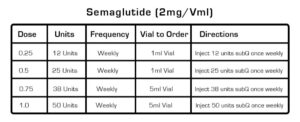
Semaglutide Dosage Chart Summary
Here is a simplified overview:
Week 1–4: Starting phase
Week 5–8: Adjustment phase
Week 9–12: Active phase
Week 13+: Maintenance phase
This gradual structure improves tolerance and effectiveness.
Frequently Asked Questions
How often is semaglutide used?
Semaglutide follows a once-weekly schedule.
Consistency is important.
Why does semaglutide dosage increase gradually?
Gradual increases improve tolerance and comfort.
This helps long-term consistency.
How long before semaglutide shows results?
Early effects may begin within weeks.
Full results develop over several months.
Why is consistency important?
Consistency maintains stable levels.
This improves effectiveness.