
Blog
Beginner’s Guide to Peptide Reconstitution
Feb
Beginner’s Guide to Peptide Reconstitution (Step-by-Step Guide for Researchers)
SEO keywords targeted: peptide reconstitution guide, how to reconstitute peptides, mixing peptides, research peptides for sale, buy peptides online, BPC-157 reconstitution, CJC-1295 mixing guide If you’ve recently purchased research peptides, one of the first and most important skills to learn is peptide reconstitution.
For beginners, this process can feel intimidating. You’re working with delicate compounds, precise measurements, and unfamiliar terminology.
But here’s the truth:
Peptide reconstitution is simple once you understand the basics.
In this beginner-friendly guide, you’ll learn:
-
What peptide reconstitution means
-
Why peptides come in powder form
-
How to reconstitute peptides step-by-step
-
Common mistakes to avoid
-
How to store peptides after mixing
Whether you’re working with BPC-157, CJC-1295, TB-500, or other research peptides, the core principles remain the same.
What Is Peptide Reconstitution?
Peptide reconstitution simply means adding a mixing solution to a lyophilised (freeze-dried) peptide powder to turn it into liquid form.
Most peptides are shipped as a dry powder to protect their stability.
Once the mixing solution is added, the peptide dissolves and becomes easier to measure accurately.
This allows researchers to work with precise volumes.
Why Are Peptides Freeze-Dried?
One of the most common beginner questions is:
Why not just sell peptides already mixed?
The answer is stability.
Freeze-drying helps:
-
Preserve peptide structure
-
Extend shelf life
-
Protect against degradation
-
Improve shipping reliability
Scientific publications indexed on PubMed frequently reference lyophilisation as a standard preservation method for peptides.
This is why nearly all professional peptide suppliers sell peptides in powder form.
Supplies Needed for Peptide Reconstitution
Before starting, make sure you have the correct materials ready.
You will need:
-
Lyophilised peptide vial
-
Mixing solution
-
Sterile syringe
-
Alcohol swabs
-
Clean workspace
Preparation helps ensure a smooth process.
Step-by-Step Guide: How to Reconstitute Peptides
Let’s go through the process step by step.
Step 1: Allow Peptides to Reach Room Temperature
If your peptide has been stored in the refrigerator or freezer, allow it to sit at room temperature for 10–15 minutes.
This helps prevent condensation inside the vial.
Avoid rushing this step.
Step 2: Clean the Vial Tops
Use an alcohol swab to clean:
-
The peptide vial stopper
-
The mixing solution vial stopper
This helps maintain a clean working environment.
Allow to dry before proceeding.
Step 3: Draw Mixing Solution Into the Syringe
Insert the syringe into the mixing solution vial.
Slowly withdraw the desired amount of liquid.
The amount used depends on your desired concentration.
Many researchers use:
-
1ml
-
2ml
-
or 3ml
depending on preference.
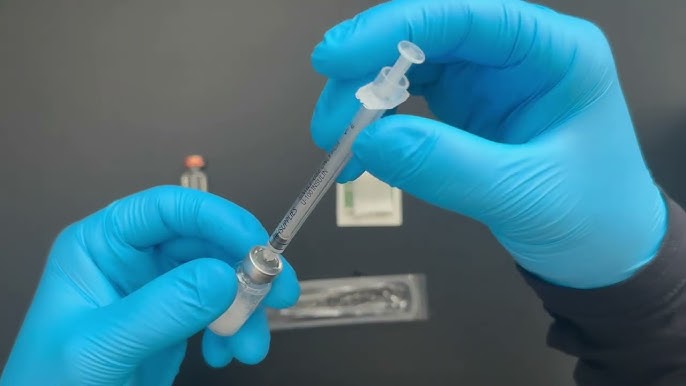
Step 4: Slowly Add the Solution to the Peptide Vial
This is one of the most important steps.
Insert the syringe into the peptide vial.
Then slowly release the liquid so it runs down the side of the glass vial.
Avoid spraying directly onto the peptide powder.
This protects the peptide structure.
Step 5: Allow the Peptide to Dissolve
Once the mixing solution has been added:
Do not shake the vial.
Instead:
-
Let it sit for several minutes
-
Gently swirl if needed
Most peptides dissolve naturally.
Shaking can damage delicate peptide chains.
Patience is key.
Why Proper Peptide Reconstitution Is Important
Correct mixing helps ensure:
-
Accurate measurements
-
Consistent research conditions
-
Stable peptide structure
Poor mixing technique can lead to inconsistent handling.
This is why proper technique matters.
Common Peptides That Require Reconstitution
Nearly all research peptides require mixing.
Some of the most popular include:
-
BPC-157
-
TB-500
-
CJC-1295
-
Ipamorelin
-
IGF-1 LR3
These are among the most searched peptides on Google.
Learning to reconstitute them properly is an essential skill.
Common Beginner Mistakes to Avoid
Many beginners make simple mistakes that are easy to avoid.
Here are the most common ones:
Shaking the Vial
This is the biggest mistake.
Shaking can damage the peptide.
Always mix gently.
Adding Solution Too Quickly
Adding liquid too fast can stress the compound.
Always add slowly.
Using Incorrect Storage
After mixing, peptides should be refrigerated.
Avoid heat and sunlight.
Skipping Cleaning Steps
Always clean vial tops before inserting a syringe.
This helps maintain a clean process.
How to Store Peptides | Beginner’s Guide to Peptide Reconstitution
Once mixed, peptides become more sensitive.
Proper storage helps maintain stability.
Recommended storage:
-
Refrigerator (2–8°C)
-
Keep sealed
-
Avoid temperature changes
Lyophilised peptides last longer than mixed peptides.
How Long Do Reconstituted Peptides Last?
This depends on storage conditions.
Proper refrigeration helps maintain stability.
Avoid leaving peptides at room temperature for extended periods.
Consistency is important.
Why Buying From a Professional Supplier Matters
Reconstitution is only one part of the process.
The quality of the original peptide also plays an important role.
Professional suppliers focus on:
-
Proper packaging
-
Secure shipping
-
Professional handling
This helps ensure a better overall experience.
Many researchers choose established suppliers like Core Peptides because of their professional presentation and consistency.
Frequently Asked Questions
Is peptide reconstitution difficult?
No.
Once you understand the steps, the process is straightforward.
Most beginners become comfortable after their first attempt.
Why do peptides come in small vials?
Small sealed vials help protect stability and maintain integrity.
Can you shake peptides to mix faster?
No.
Always mix gently.
Shaking can damage peptides.
Why do researchers reconstitute peptides?
Reconstitution allows peptides to be measured accurately.
Final Thoughts Beginner’s Guide to Peptide Reconstitution
Learning how to reconstitute peptides is one of the most important skills for anyone working with research peptides.
The key principles are simple:
Work cleanly
Add solution slowly
Never shake
Store properly
Once you’ve done it once, the process becomes easy and routine.
As peptide research continues to grow worldwide, understanding proper handling helps ensure consistency and confidence.