
Blog
How to Store Syringes Safely
Feb
How to Store Syringes Safely
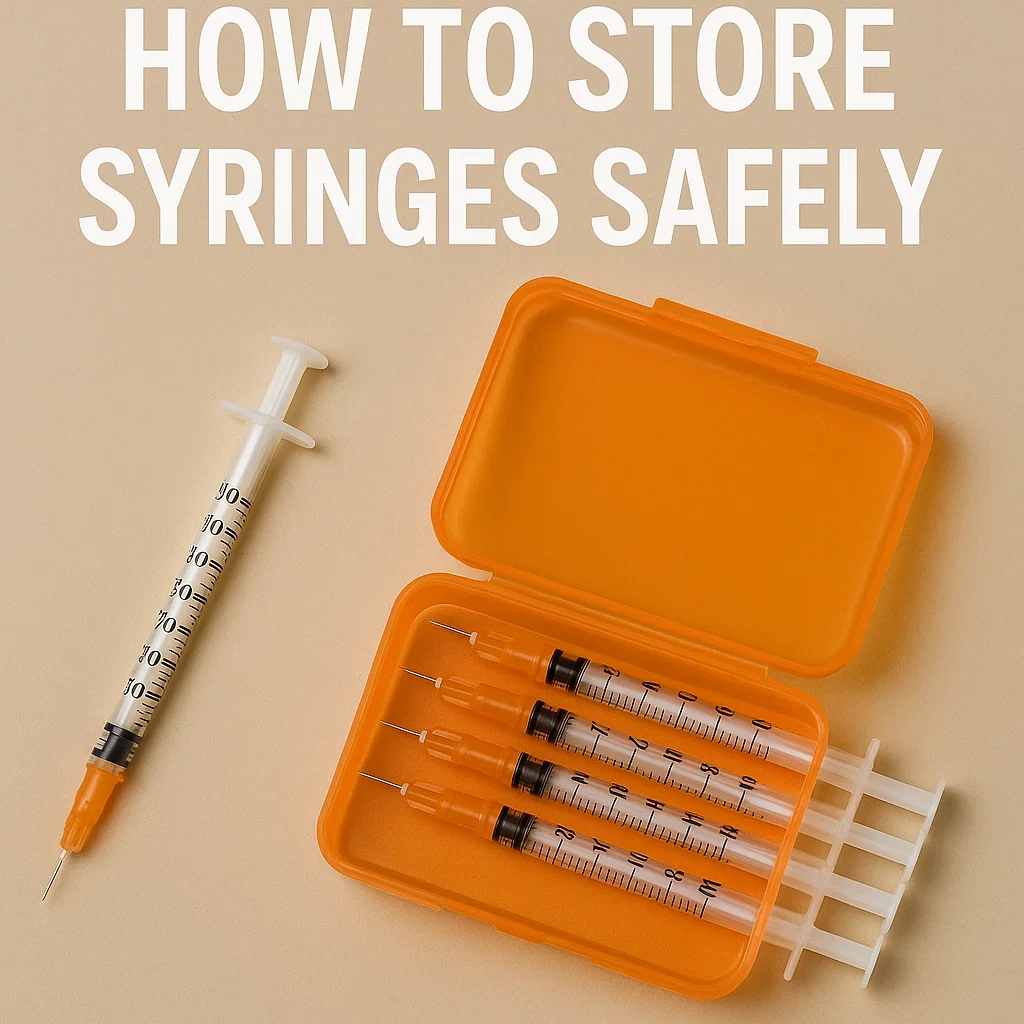
Storing syringes isn’t just a housekeeping task. Proper storage protects sterility, prevents injuries, and ensures your dosing routine is predictable. Whether you are using peptides in a home lab or organizing clinic supplies, every syringe you handle should remain sterile, accounted for, and easy to access without risk.
A quick story to set the scene
Consider “Jay,” a disciplined lifter who kept all his peptide tools in a bathroom drawer. One day, he grabbed a syringe that appeared new, drew his dose, and only then noticed the antistick cap wasn’t fully seated. While he hadn’t contaminated the needle, the moment was a near miss.
We helped him move his setup into a lockable plastic tote, labeled each section by size and purpose, and added a small desktop checklist. Nothing fancy—just organization and consistency. The system handled the thinking for him, and problems disappeared.
Use Jay’s story as a model: safe syringe storage isn’t complicated. It’s clean, labeled, and deliberately boring—the best kind of safety.
Why syringe storage matters more than you think
Proper syringe storage reduces three key risks:
-
Preserves sterility – Needles stay sealed until the moment of use.
-
Prevents injuries – Organized storage reduces accidental needle sticks.
-
Ensures dosing accuracy – You always grab the correct syringe size and needle length.
A consistent storage routine also lowers cognitive load: less rushing, fewer mistakes, and improved focus on your workflow.
For peptide users, storage has a fourth advantage: it keeps your workflow tight, allowing you to focus on other critical tasks like dose calculation and injection site rotation. Tools like the Peptide Dosage Calculator and Peptides Power FAQ can further streamline your process.
Understand the parts you are storing
Syringes and needles usually arrive sterile in sealed blisters or sleeves. Common peptide setups include:
-
U-100 insulin syringes with permanently attached fine needles
-
Luer-lock syringes with detachable needles
Key components: barrel, plunger, hub, needle, and protective cap. Each part is designed to remain sterile until opened.
Your storage system should protect this sealed state and prevent accidental mixing of new and used syringes.
The golden rule: unopened stays unopened
Sealed packaging is your best friend. Avoid opening syringes ahead of time:
-
Airborne dust and moisture increase contamination risk once opened.
-
Keep all syringes sealed until ready to prepare a dose.
-
Inspect packages for tears or damage; discard compromised items immediately.
The cost of one syringe is always less than the cost of a mistake.
The storage environment syringes prefer
Temperature and humidity
Room temperature is ideal unless otherwise specified. Avoid steamy bathrooms, kitchens, and humid areas. High humidity can degrade packaging and encourage condensation. Use a lidded container with a desiccant if your climate is humid.
Light and dust
Direct sunlight can weaken plastic and adhesives. Store syringes in opaque or semi-opaque bins away from windows. Smooth interior surfaces prevent abrasion and protect labels.
Stability and access
Place your syringe bin on a stable shelf or in a drawer that does not slam. If you share your home with children or pets, a lockable case adds safety. Many people store a compact kit near their dosing area and keep bulk boxes on a higher shelf to reduce clutter.
Build a simple, reliable container system
A sturdy plastic tote with a snap lid is sufficient. Inside, use smaller bins to separate items:
-
Bin 1: Unopened syringes
-
Bin 2: Unopened needles (if using detachable tips)
-
Bin 3: Alcohol swabs, labels, and other supplies
For multiple syringe sizes, divide bins with index cards or drawer dividers. Keep a permanent marker nearby for labeling and tracking dates or notes.
Label the outside of your main tote with:
-
Contents
-
Your initials
-
Emergency contact information
This ensures organization and prevents confusion if the container is moved.
Key takeaway
Safe syringe storage is simple but disciplined. By keeping syringes:
-
Sealed
-
Labeled
-
Organized
-
Protected
you reduce contamination risks, prevent injuries, and maintain a reliable dosing workflow.
A consistent system ensures that every syringe you touch is sterile, safe, and ready for use—making your routine smoother and safer every time.

