
Blog
How Does Peptide Therapy Work?
Feb
How Does Peptide Therapy Work? Complete Science-Backed Guide
How Does Peptide Therapy Work? Peptide therapy is rapidly gaining attention in medical, wellness, and anti-aging fields due to its ability to target specific biological processes at the cellular level. Unlike many treatments that affect the entire body broadly, peptide therapy works by sending precise signals to cells to perform specific functions such as repairing tissue, producing hormones, improving skin quality, and supporting recovery.
To understand how peptide therapy works, you must first understand what peptides are and how they function inside the body.
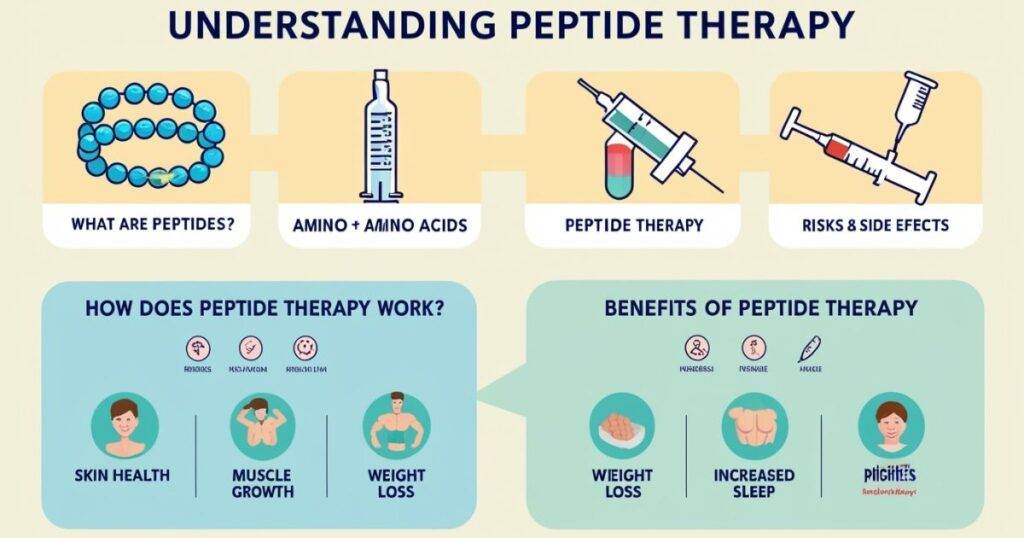
Peptides are short chains of amino acids, which are the building blocks of proteins. These molecules naturally exist in your body and act as messengers, telling cells what to do. They regulate critical processes including hormone production, healing, metabolism, immune function, and tissue regeneration.
However, as you age, your natural peptide production declines. This decline contributes to many signs of aging and reduced performance, including:
• Wrinkles and sagging skin
• Slower muscle growth
• Increased body fat
• Reduced recovery
• Lower energy levels
• Hormonal imbalance
Peptide therapy works by restoring or optimizing these signaling processes.
What Happens After You Start Peptide Therapy
Once peptide therapy begins, the peptides enter the bloodstream and travel to their target receptors.
The timeline of effects typically follows this pattern:
First 1–2 weeks
• Cellular signaling begins
• Internal biological changes start
Weeks 3–6
• Improved recovery
• Better sleep
• Improved skin hydration
Weeks 6–12
• Visible skin improvements
• Improved body composition
• Increased performance and recovery
3–6 months
• Maximum benefits achieved
• Long-term cellular improvements
Results vary depending on the peptide, dosage, and individual biology.
Why Peptide Therapy Is Different From Traditional Treatments
Most traditional treatments replace hormones directly.
Peptide therapy works differently.
Instead of replacing hormones, peptides stimulate your body to produce its own hormones naturally.
This makes the process more targeted and often more physiologically natural.
Common Areas Peptide Therapy Supports
Peptide therapy is commonly used to support:
Skin and anti-aging support
Muscle recovery and performance
Fat metabolism
Hormone optimization
Tissue repair
Sleep quality
Energy levels
Is Peptide Therapy Effective?
Scientific research shows peptides play essential roles in regulating biological processes.
Because peptides work with your body’s natural systems, they offer targeted support rather than forcing artificial changes.
However, results depend on:
• The specific peptide used
• Consistency
• Proper protocol
• Individual response
Is Peptide Therapy Safe?
Peptides naturally exist in the body, which is why they are generally well tolerated when used appropriately.
However, quality, sourcing, and proper use are critical factors.
The Science Behind Peptide Therapy
The science of peptides is simple yet powerful. Peptides are like keys that unlock different processes in your body.
By using synthetic peptides, doctors can help you unlock the benefits your body needs. Studies show that peptides can help with everything from anti-aging to improving muscle growth.
For example, growth hormone-releasing peptides like CJC-1295 can help your body produce more growth hormone.
Growth hormone is important for muscle recovery, fat loss, and even better sleep.
Another peptide, GHK-Cu, is known for its anti-aging properties. It helps the body produce more collagen, which makes skin look younger and firmer.
Scientific studies have supported the use of peptide therapy in areas such as:
- Muscle growth: Studies show that certain peptides can help build muscle mass.
- Fat loss: Peptides can help boost metabolism and burn fat more efficiently.
- Anti-aging: Peptides that increase collagen production can make skin look healthier and younger.
Benefits of Peptide Therapy
The advantages of peptide therapy are many-fold, contingent on the category of peptides used. Some of the most common benefits people report:
- Improved Skin Health: Peptides can also be beneficial for the skin, as they help smooth wrinkles and fine lines by promoting collagen production. Collagen is a protein which helps your skin maintain firmness and appear healthy. Collagen naturally decreases as we age, causing lines and wrinkles to appear in the skin. This can be reversed by raising collagen synthesis including the help of peptide therapy.
- Beneficial for Muscle Building: People in sports or fitness fields use peptides to achieve their faster muscle building process. Growth hormone, on the other hand, helps build bigger, stronger muscles.
- Fat Burning: Peptides boost your metabolism and help in burning a lot of fat. That translates to a lot of people and it can be quite somebody who is on a binge closing diet.
- Better Quality Sleep: In addition to enabling the faster recovery of the body, peptides such as CJC-1295 can also improve your sleep quality. Getting a proper sleep results in more energy and faster recovery.
- Rapid Healing: Peptides assist in the recovery due to injury and everyday routines. It can make them a great choice for athletes or those recovering from surgery.
Risks and Side Effects of Peptide Therapy
Peptide therapy is no different. There are potential risks to any medical treatment, and these can present in the context of peptide therapy as well.
Before you are in therapy, it is important to know the other side of this: what can happen as a side effect. Side effects that may be seen in some people include:
Redness or irritation: Some people may have slight redness and swelling at the site of injection.
Peptides increase appetite: Some peptides, especially those that promote growth hormones increase feelings of hunger.
Additionally, water retention may also occur when using peptides that raise growth hormone.
Previous Saying It’s too soon to say what symptoms might be related directly to peptide therapy, but fatigue or lightheadedness are a possibility
Among them there are severe effects, which however occur very rarely, such as allergy. That is why it is imperative to work with a practitioner who is well versed in peptide therapy.
He will guide you in selecting the proper peptides and observe your therapy for possible side effects.
Who Is Peptide Therapy For?
For many patients, peptide therapy may be beneficial. It is useful for targeted health and wellness seekers. Some examples of who may benefit from peptide therapy include:
Signs of aging: If you have early onset signs of aging such as more wrinkles or saggy skin, then some kinds of peptide therapies boost collagen production which in turns allows your skin to look younger.
Athletes: If you are an athlete, peptides can be very beneficial in helping build muscles and also recover faster from exercises. This can enhance performance and decrease injury.
Weight Loss: Agonists of certain peptides may help increase metabolism, allowing the body to better burn fat.
Peptide therapy can also improve sleep for individuals who have a hard time sleeping, meaning that better sleep is bound to ensure a healthier body.
Before taking any peptide, you will need to discuss with a doctor about the best course of action.
They can help you decide if peptide therapy is best suited to your needs and they can give advice on what dosage and type of peptide which to use.
What Results Can You Expect from Peptide Therapy?
Peptide Therapy Results vary from one individual to another. For some, it takes weeks for them to experience positive results while others may take a little longer before change becomes evident.
It will also vary on the nature of peptides utilized, and their general state of health.
Peptide therapy is most used in the modulation of:
Younger looking skin: A lot of people find that their skin appears more firm or healthier after beginning peptide treatment.
Build: Those who are using peptides to build muscle can expect more significant muscles and greater overall strength.
Weight loss: Over a period of time weight loss: Certain peptides promote fat burning also helping in losing excess weights.
Increased energy levels: Patients typically note better energy, and are more refreshed when starting peptide therapy.
The key takeaway is that peptide therapy functions optimally when integrated into a healthy lifestyle. Passing as good, plus daily activity and adequate sleep will enhance your treatment.
