
Blog
GHK-Cu vs Matrixyl: Which Skin Peptide Is Better for Research?
Mar
GHK-Cu vs Matrixyl: Which Skin Peptide Is Better for Research?
Skin peptides are a major topic in cosmetic and lab research, and two names come up again and again: GHK-Cu and Matrixyl. Both are often studied for their possible role in skin appearance, collagen support, and visible aging signs. Because of that, many researchers and skincare-focused readers want to know which one may be the better option.
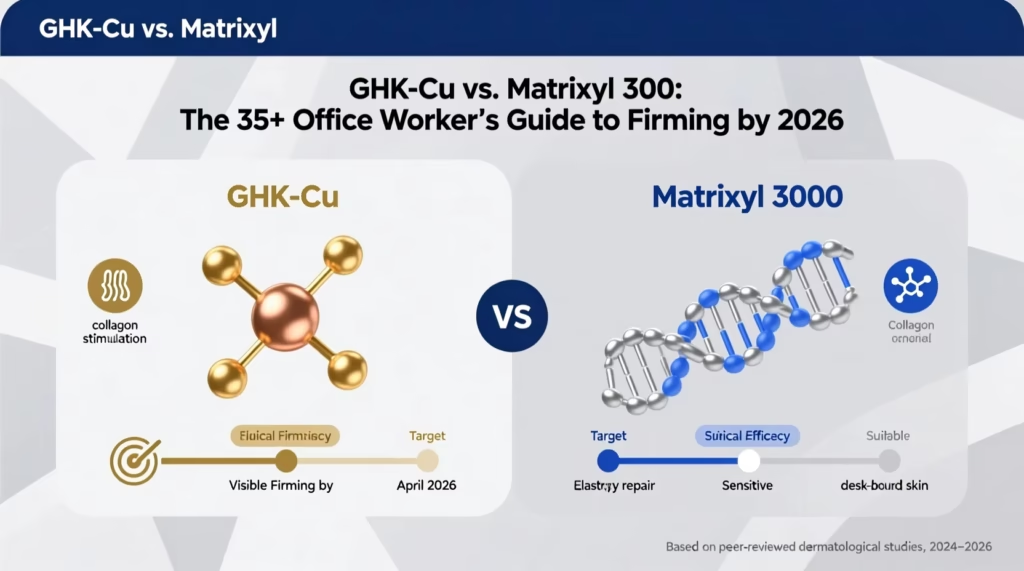
The truth is simple: GHK-Cu and Matrixyl are both useful, but they are not exactly the same type of peptide. GHK-Cu is often linked to skin repair, skin renewal, and collagen-related pathways. Matrixyl is more commonly linked to wrinkle-focused skincare, firmness, and smoother-looking skin.
What is GHK-Cu?
GHK-Cu is a copper peptide made from a small peptide called GHK bound to copper. In skin research, it is one of the best-known peptides because it is often linked to skin repair and dermal support.
Researchers often study GHK-Cu for possible effects on:
- Collagen support
- Fibroblast activity
- Skin firmness
- Skin density
- Tissue remodeling
- Anti-inflammatory pathways
- Skin recovery after stress
This is why GHK-Cu is often seen as more than just an anti-aging peptide. It is commonly described as a peptide with a broader skin renewal profile.
What is Matrixyl?
Matrixyl is a popular name used for cosmetic signal peptides. In most skincare discussions, Matrixyl usually refers to:
- Palmitoyl pentapeptide-4, or
- Matrixyl 3000, which is a blend of palmitoyl tripeptide-1 and palmitoyl tetrapeptide-7
Matrixyl peptides are often studied for their possible role in:
- Supporting collagen-related signals
- Improving the look of fine lines
- Helping skin feel firmer
- Supporting smoother-looking skin
- Supporting extracellular matrix proteins
Compared with GHK-Cu, Matrixyl is more commonly linked to cosmetic anti-aging products and wrinkle-focused skincare.
A simple way to understand it is:
- GHK-Cu = repair and skin renewal research
- Matrixyl = anti-aging and wrinkle-focused research
Main difference between GHK-Cu and Matrixyl
The biggest difference is their research focus.
GHK-Cu is often studied for:
- Skin repair
- Tissue support
- Collagen remodeling
- Anti-inflammatory effects
- Skin recovery pathways
Matrixyl is often studied for:
- Fine line appearance
- Wrinkle-focused formulas
- Skin firmness
- Smoother-looking skin
- Cosmetic anti-aging support
So while both may be linked to collagen and skin appearance, the way they are positioned is different.
GHK-Cu is usually seen as a wider skin support peptide.
Matrixyl is usually seen as a cosmetic anti-aging signal peptide.
Which one may be better for collagen research?
Both peptides are often connected to collagen support, but they are not usually described in the same way.
GHK-Cu and collagen
GHK-Cu is often discussed in skin research as a peptide that may support:
- Collagen production
- Fibroblast activity
- Skin remodeling
- Elasticity support
- Better skin structure over time
Because of this, GHK-Cu is often used in discussions about skin regeneration, not only anti-aging.
Matrixyl and collagen
Matrixyl is also very relevant in collagen-focused skincare research. It is often used in formulas that target:
- Pro-collagen support
- Skin firmness
- Fine lines
- Smoother skin texture
- Visible wrinkle reduction
A very simple way to explain it is:
- GHK-Cu = broader collagen and repair support
- Matrixyl = collagen signaling for cosmetic anti-aging goals
If your content is about deep skin renewal and structure, GHK-Cu usually feels stronger.
If your content is about cosmetic wrinkle support, Matrixyl is often easier for readers to recognize.
Which one may be better for wrinkles?
This depends on the type of article or research angle.
Matrixyl for wrinkles
Matrixyl is widely known in anti-aging skincare. It is often used in serums and creams that focus on:
- Fine lines
- Wrinkle appearance
- Smoother-looking skin
- Firmer-looking skin
- Cosmetic anti-aging routines
Because of this, Matrixyl is often easier for readers to understand if they are familiar with skincare products.
GHK-Cu for wrinkles
GHK-Cu is also used in wrinkle-related skincare, but it is often discussed in a broader way. Instead of being positioned only as a wrinkle peptide, it is more often described as a peptide that may support:
- Skin renewal
- Dermal strength
- Skin recovery
- Better texture
- Firmer appearance
- Overall visible skin quality
So the cleanest answer is:
- Matrixyl may be better known for wrinkle-focused skincare
- GHK-Cu may offer a wider skin repair and renewal angle
Which one may be better for skin repair research?
For skin repair, GHK-Cu usually stands out more.
This is because GHK-Cu is commonly linked to:
- Tissue repair pathways
- Skin remodeling
- Fibroblast support
- Anti-inflammatory balance
- Better recovery signals
- Skin density support
That makes it a stronger fit for research focused on skin that is stressed, aging, or recovering.
Matrixyl can still be useful in skin-support formulas, but it is more often discussed in cosmetic anti-aging terms rather than full skin repair terms.
So if the goal is damaged-looking skin, recovery, or broader dermal support, GHK-Cu is usually the stronger comparison winner.
Which one is more common in skincare formulas?
Matrixyl is extremely common in cosmetic skincare.
It is often used in:
- Anti-aging serums
- Wrinkle creams
- Firming formulas
- Day and night repair products
- Multi-peptide skincare blends
Brands like Matrixyl because it is easy to market for visible aging signs.
GHK-Cu is also very popular, especially in more premium skincare products.
It is often used in:
- Copper peptide serums
- Skin renewal products
- Advanced anti-aging formulas
- Recovery-focused skincare
- High-end peptide blends
So if you are looking at product familiarity:
- Matrixyl is more common in mainstream anti-aging formulas
- GHK-Cu is often seen as a more advanced or premium skin peptide
Which one sounds stronger for serious skin research?
If the audience is more research-focused, GHK-Cu usually sounds stronger.
Why?
Because it is often connected to:
- Skin repair
- Collagen remodeling
- Skin renewal
- Fibroblast support
- Anti-inflammatory activity
- Overall dermal health support
That does not make Matrixyl weak. It just means the research angle is more targeted.
A simple way to say it:
- GHK-Cu = broader and deeper skin support
- Matrixyl = focused cosmetic anti-aging support
Can GHK-Cu and Matrixyl be used together in discussion?
- Skin appearance
- Collagen support
- Skin texture
- Firmness
- Aging-related research
But they should not be treated as if they are identical.
That is because:
- GHK-Cu is a copper-binding tripeptide
- Matrixyl is usually a palmitoylated signal peptide or peptide blend
This means they may overlap in results, but they are not exactly the same in how they are commonly studied.
That makes comparison useful, but the comparison should stay simple and clear.
Best use case for GHK-Cu
GHK-Cu may be the better fit when the topic is:
- Skin repair peptides
- Copper peptides for skin
- Collagen remodeling
- Fibroblast support
- Skin recovery
- Skin density and firmness
- Skin renewal research
- Advanced dermal support
If the goal is to talk about overall skin quality and not just wrinkles, GHK-Cu often gives you the stronger angle.
Best use case for Matrixyl
Matrixyl may be the better fit when the topic is:
- Anti-aging skincare peptides
- Fine line support
- Wrinkle-focused formulas
- Skin smoothing
- Cosmetic collagen support
- Beginner-friendly skincare ingredients
- Firmness and visible texture support
If the goal is a classic skincare anti-aging comparison, Matrixyl often feels more familiar to readers.
Which one is better overall?
If you want the simplest answer:
- Best for broader skin repair and renewal research: GHK-Cu
- Best for wrinkle-focused cosmetic research: Matrixyl
That is the clearest way to explain it.
If someone wants a peptide that sounds more complete for skin structure and recovery, GHK-Cu usually wins.
If someone wants a peptide that fits directly into anti-aging skincare language, Matrixyl is often the easier match.
Final thoughts
When comparing GHK-Cu vs Matrixyl, both peptides have value, but they fit different research goals.
GHK-Cu is often the stronger choice for:
- Skin repair
- Skin renewal
- Collagen remodeling
- Fibroblast support
- Dermal structure research
- Recovery-focused skin studies
Matrixyl is often the stronger choice for:
- Wrinkle-focused skincare research
- Fine line appearance support
- Cosmetic anti-aging formulas
- Firmness and smoothness studies
- Easy-to-understand peptide skincare comparisons
If the goal is a broad and stronger skin peptide discussion, GHK-Cu often comes out ahead.
If the goal is a more classic anti-aging skincare angle, Matrixyl remains one of the top cosmetic peptide options.
For many readers, the easiest takeaway is this:

