
Blog
Peptides for Hair Growth and Hair Loss
Feb
Peptides for Hair Growth and Hair Loss (Complete Guide, Comparison Chart & Results Timeline 2026)
The best peptides for hair growth include GHK-Cu, PTD-DBM, and IGF-1 LR3. These peptides are widely researched for their potential to support hair follicles, scalp health, and hair growth cycles.
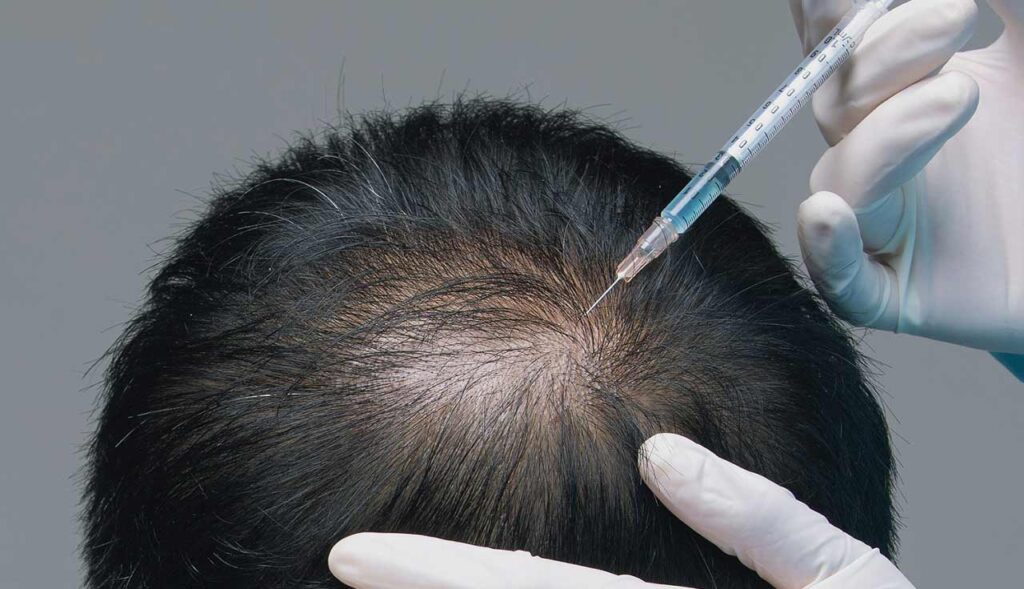
Peptides for hair growth and hair loss have become one of the most researched topics in regenerative and cosmetic science. Hair follicles depend on complex cellular signaling, blood supply, and protein production. Certain peptides are studied for their ability to support hair follicle function, scalp health, and hair growth cycles.
Unlike traditional approaches that focus only on external treatments, peptides are researched for their role in supporting follicular signaling, scalp circulation, and hair structure support.
This guide explains:
-
Best peptides for hair growth
-
Hair growth peptide comparison chart
-
Results timeline
-
How hair peptides work
-
Research insights
Hair Growth Peptides Comparison Chart
This chart provides an overview of the most researched peptides for hair support.
| Peptide | Primary Function | Hair Growth Support | Research Popularity | Application Type |
|---|---|---|---|---|
| GHK-Cu | Copper peptide, follicle support | Extremely High | Extensive | Topical |
| PTD-DBM | Follicle signaling peptide | Very High | Growing | Topical |
| TB-500 | Tissue repair support | High | Strong | Systemic |
| BPC-157 | Tissue support peptide | Moderate-High | Strong | Systemic |
| IGF-1 LR3 | Growth factor support | High | Moderate | Systemic |
| Melanotan II | Pigmentation support | Moderate | Moderate | Systemic |
How Peptides Help Hair Growth
Hair growth peptides are studied for their ability to support key hair growth mechanisms:
Follicle stimulation support
Peptides help regulate signals involved in hair follicle function.
Scalp circulation support
Improved circulation supports nutrient delivery to hair follicles.
Hair structure support
Peptides help support proteins involved in hair strength and thickness.
Hair cycle regulation
Hair grows in cycles. Peptides help support healthy cycle balance.
Best Peptides for Hair Growth Ranked
Based on research popularity and effectiveness:
1. GHK-Cu (Copper Peptide)
GHK-Cu is the most researched peptide for hair growth.
Research focuses on:
Hair follicle support
Scalp health
Hair thickness support
It is widely used in topical hair research.
2. PTD-DBM
PTD-DBM is studied for its potential to support follicle activation.
Research interest continues to grow rapidly.
3. IGF-1 LR3
Supports growth factor signaling involved in hair growth.
Often studied in regenerative research.
4. TB-500
Supports tissue environment and scalp condition.
Indirectly supports hair growth.
5. BPC-157
Supports tissue repair and circulation.
Studied for overall tissue support.
Hair Growth Peptides Dosage Chart (Research Overview)
This chart shows commonly referenced ranges:
| Peptide | Typical Research Range |
|---|---|
| GHK-Cu | 1–2% topical solution |
| PTD-DBM | Topical application daily |
| TB-500 | 2–5 mg weekly |
| BPC-157 | 200–500 mcg daily |
| IGF-1 LR3 | 20–50 mcg daily |
Topical peptides are most commonly studied for hair.
Hair Growth Results Timeline
Growth is gradual and requires patience.
| Phase | Timeline | Activity |
|---|---|---|
| Early phase | Weeks 1–4 | Scalp adaptation |
| Activation phase | Weeks 4–8 | Follicle stimulation |
| Growth phase | Months 2–4 | Visible improvements |
| Full results | Months 4–6 | Maximum hair support |
Why GHK-Cu Is the Most Popular Hair Growth Peptide
GHK-Cu is widely studied because of its role in:
Hair follicle support
Scalp condition support
Hair thickness research
It is commonly used in topical research products.
Hair Loss Causes and How Peptides Help
Hair loss can occur due to:
Follicle stress
Hormonal changes
Age
Genetics
Peptides help support follicle environment.
Topical vs Systemic Hair Peptides
| Type | Purpose |
|---|---|
| Topical peptides | Direct follicle support |
| Systemic peptides | Indirect hair support |
Topical peptides are most commonly used for hair research.
Benefits of Hair Growth Peptides
Research focuses on supporting:
Hair thickness
Hair density
Follicle health
Hair growth cycle
Safety and Research Considerations
Research commonly reports:
Mild scalp irritation
Temporary sensitivity
Topical application is generally well tolerated in research.
Frequently Asked Questions
What is the best peptide for hair growth?
GHK-Cu is the most researched hair growth peptide.
How long do hair peptides take to work?
Hair growth results typically appear within 2–6 months.
Are peptides better than traditional hair treatments?
Peptides are studied for their role in supporting follicle signaling.
Can peptides stop hair loss?
Research focuses on supporting hair follicles and scalp condition.
Choosing the Right Hair Growth Peptide
Selection depends on:
Hair growth support goals
Scalp health
Application preference
Comparison charts help simplify selection.
Final Thoughts on Peptides for Hair Growth and Hair Loss
Peptides for hair growth and hair loss represent an exciting area of cosmetic and regenerative research. Peptides such as GHK-Cu and PTD-DBM are widely studied for their ability to support hair follicles, scalp health, and hair growth cycles.
Understanding hair growth timelines, peptide functions, and research applications helps provide a clearer view of their role in hair research.
As research advances, hair growth peptides continue to gain popularity.