
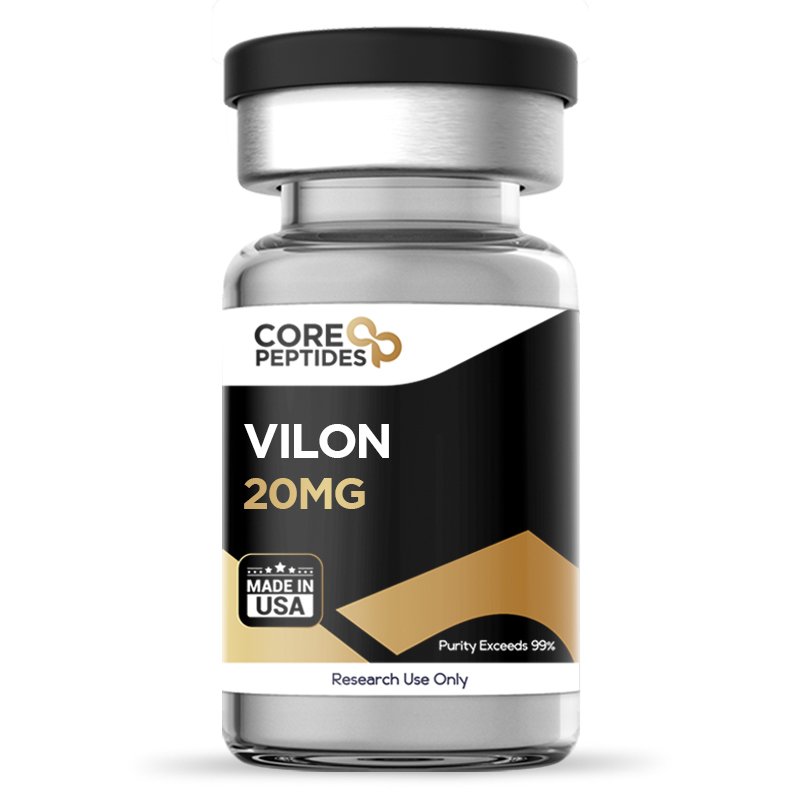
Vilon Peptide
In vitro research by Lezhava et al. has explored the potential actions of Vilon on chromatin structures within cultured lymphocytes.(3) As a reference, chromatin is composed of DNA and associated proteins and includes distinct functional domains: constitutive heterochromatin and facultative heterochromatin. Constitutive heterochromatin consists largely of non-coding satellite DNA located near centromeres, while facultative heterochromatin contains condensed euchromatic regions with genes that are not actively transcribed.
Lezhava et al. suggest that Vilon peptide may induce deheterochromatinization, or unrolling, of total heterochromatin. This process potentially reactivates ribosomal genes by decondensing nucleolus organizer regions (NORs), which are essential for ribosomal RNA synthesis. By reactivating these genes, Vilon might support synthetic processes within the cells. Additionally, Vilon appears to release genes that were repressed due to the condensation of euchromatic regions forming facultative heterochromatin.
This decondensation may allow previously inactive genes to become transcriptionally active, possibly influencing various cellular functions. Importantly, Vilon peptide does not seem to induce decondensation of pericentromeric structural heterochromatin, indicating that its actions may be selective toward facultative heterochromatin. This specificity suggests that “Vilon causes progressive activation (deheterochromatinization) of the facultative heterochromatin with increased aging” of the cells, as stated by the authors. This mechanism might be associated with its potential to activate or suppress different genes and consequently affect immune cell proliferation and differentiation.
Previous studies by Sevostianova et al. have also posited that short peptides like Vilon may regulate gene expression and stimulate thymocyte activation. For instance, Vilon has been associated with increased expression of markers such as HLA-DR and CD54 in thymic cell cultures. It may also normalize lymphocyte blast-transformation responses, which are considered to be crucial for proper immune function. These actions imply that Vilon peptide might modulate immune cell functions at the molecular level.
Vilon Peptide and Cellular Proliferation
Research by Khavinson et al. suggests that Vilon peptide may stimulate the proliferative activity of thymocytes, which are essential cells within the thymus involved in immune responses. In experimental models exposed to γ-irradiation, Vilon appeared to promote recovery in critical tissues. Histological analyses revealed that Vilon might lead to the enlargement of thymic lobules, primarily due to the widening of the cortical layer. There was an observed increase in the presence of proliferating cell nuclear antigen (PCNA)-positive nuclei within the thymus, which indicates heightened thymocyte proliferation. The proliferative index (I_PCNA) in the thymus increased from 26% to 37% with Vilon peptide exposure, suggesting well-supported cellular activity in this organ.
Vilon peptide was also studied by Ivanov et al. in an experimental model of low lymphocyte count due to repeated irradiation. In this experiment, Vilon appeared to normalize lymphocyte numbers, contrasting with the radioactive-chemical control group where lymphopenia persisted. Additionally, the Vilon group exhibited a higher number of granulocytes compared to the intact control group. Khavinson et al. suggest that this peptide possibly supports the proliferative potential of stem cells in the intestinal epithelium, particularly within the duodenal mucosa, indicating a role in supporting the regenerative processes of the gastrointestinal tract.
Within the duodenal mucosa, Vilon exposure was associated with a 3.4% increase in the proliferative index in the crypt generation zones and a 1.5-fold increase in the number of cells entering mitosis. This support implies that Vilon may support the renewal and repair of the intestinal lining by stimulating stem cell activity. Moreover, Vilon was observed normalizing the histological appearance of intestinal crypts following exposure to radiation, which may indicate its potential role in facilitating tissue recovery.
Be the first to review “Vilon (20mg)”
Related products


PEPTIDES

PEPTIDES


PEPTIDES

Reviews
There are no reviews yet.