
Blog
Standard Procedure For Storing Peptides
May
Standard Procedure For Storing Peptides
Long-term peptide storage over several months and years demands proper refrigeration. The preferred and usual temperature for storage is -80C (-112F). Freezing peptides is optimal to preserve their stability and retain functional viability.
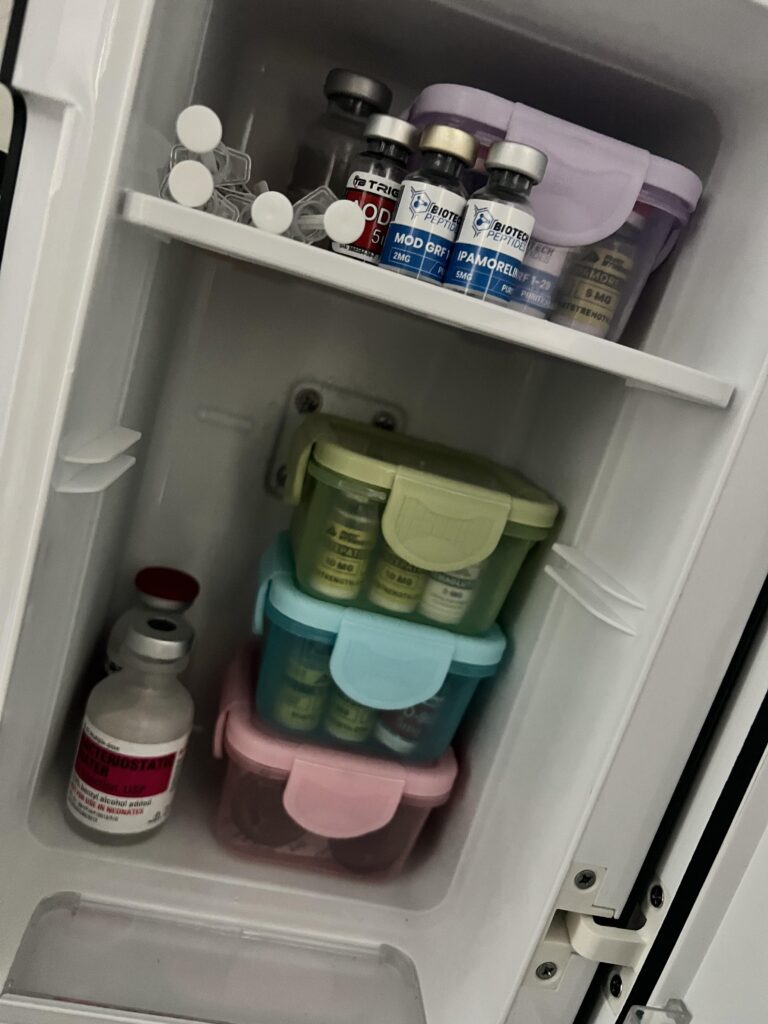
Peptides should be stored in a cold area and away from light. If the peptides are meant to be used immediately or within several days, weeks, or months, short-term refrigeration under 4C (39F) is an acceptable temperature. Lyophilized molecules remain stable at room temperatures for several weeks or more. Especially if they are used within weeks, room temperature storage usually is sufficient.
Researchers avoid repeated freeze-thaw cycles to ensure the proper stability of the peptides. Repeated freeze-thaw cycles can make the molecules prone to faster degradation. Frost-free freezers should also be avoided to store peptides as defrosting cycles lead to fluctuation of temperatures.
Eliminating the risk of Moisture Contamination
Moisture contamination occurs when vials of peptides are opened immediately after bringing them out to room temperature from frozen conditions. The peptides tend to absorb moisture from the cool air inside the container or the inside of the container. Hence, the best practice would be to allow the peptide to equilibrate to room temperature before opening.
Eliminating the risk of oxidation
It is important to minimize a peptide’s exposure to the air. A peptide container must be kept closed as much as possible. After the required quantity of peptides has been removed, the container should be resealed under an atmosphere of dry, inert gas (example: nitrogen or argon) will reduce the potential for the remaining molecule to become oxidized. The following peptide amino acids are most prone to air oxidation:
- C (Cysteine)
- M (Methionine)
- W (Tryptophan)
As peptide stability largely gets influenced by freeze-thaw cycles and exposure to air, researchers prefer to determine the requirement of every experiment and segregate the required amounts accordingly into separate vials. This practice is extremely beneficial against peptide degradation.
Containers To Utilize for Peptide Storage
Containers for peptide storage should be completely clean, clear, and structurally sound. They should also be chemically inert so that they do not react with the peptide solution inside and are appropriately sized to store the amount of peptide in them.
Both glass and plastic vials are commonly used:
- Plastic Vials: Can be either composed of polystyrene and those made of polypropylene. Polystyrene vials are generally clear but not chemically inert, whereas polypropylene vials are generally translucent but chemically resistant.
- Glass Vials: These are best suited for peptide storage and are the preferred storage method; however, they often run the risk of breakage during shipment. Hence peptides are sometimes shipped in inert plastic containers and then transferred to glass ones for storage and vice versa.
Accelerated Degradation During Peptide Storage In A Solution
The shelf life of peptides improves when stored in lyophilized form and reduces drastically when dissolved in solvents. Peptide solutions are further prone to bacterial contamination and degradation. Peptides containing Cys, Met, Trp, Asp, Gln, and N-terminal Glu in their sequences have especially short shelf life when they get reconstituted. However, if it is compulsory to store the peptides in solution, sterile buffers at pH 5-6 are recommended, and the peptide solution should be aliquoted to avoid repeated freezing and thawing. Peptide solutions have been stable for up to 4 to 5 weeks when refrigerated at 4C (39F), but those molecules with inherent instability should be kept frozen when not in use.
Peptides Storage Containers
Containers for peptide storage should be completely clean, clear, and structurally sound. They should also be chemically inert so that they do not react with the peptide solution inside and are appropriately sized to store the amount of peptide in them. Both glass and plastic vials are commonly used; plastic vials can be either composed of polystyrene or polypropylene. Polystyrene vials are generally clear but not chemically inert, whereas polypropylene vials are generally translucent but chemically resistant. High-quality glass containers are best suited for peptide storage, but they often risk breakage during shipment. Hence peptides are sometimes shipped in inert plastic containers and then transferred to glass ones for storage and vice versa.
What To Remember When Storing Peptides
Remember to avoid repeated freezing and thawing of peptides or overexposure to air when storing peptides. Peptides are sensitive to light; remember to lessen exposure to it. Avoid long-term solution storage as well.
*It is preferable to store in dark, dry, or cold places. In addition, peptides should be aliquoted following the specific experimental requirements.
Top tips for dissolving peptides
Peptide solubility is mostly determined by the physical properties of its constituting amino acids. Amino acids can be described as non-polar/hydrophobic, polar uncharged, acidic or basic. In general, peptides with a large proportion of non-polar amino acids, such as peptides originating from the transmembrane regions of proteins, will be difficult to dissolve in water and might require the use of organic solvents. On the contrary, the more polar residues present in the peptide sequence, the easier it will be to dissolve a peptide in an aqueous solution. Acidic peptides will be more soluble at higher pH under alkaline conditions, whilst peptides that are overall basic will be most soluble at lower pH. The general guidelines described below will help you determine the best solvent to dissolve your peptide.
- Only use a small amount of peptide when performing solubility testing rather than the full amount. 1 mg amount is usually suitable.
- Start with volatile solvents when first dissolving a peptide of unknown solubility. This will enable the buffers to be removed by lyophilisation and the dissolution to be attempted again if necessary.
- Calculate the net charge of the peptide to determine whether the peptide is acidic or basic and decide on the best buffer pH conditions to use. To do so, assign a value of -1 to each acidic residue (Asp, Glu and the C-terminal -COOH) and a value of +1 to basic residues (Arg, Lys, His and N-terminal -NH2).
If the net charge of the peptide is positive, the peptide is, therefore, basic, and you may test with a 10-30% acetic acid solution. On the contrary, if the net peptide charge is negative, the peptide is considered acidic, and a 0.5% ammonium hydroxide solution is recommended. Do not use the latter method if your peptide has disulphide bridges, as the high pH may cause them to unfold.
- In the case of neutral peptides, start with organic solvents such as acetonitrile, methanol or isopropanol. For very hydrophobic peptides, dimethyl sulfoxide (DMSO) can be particularly useful in dissolving peptides and has the advantage of being tolerated by cells. DMSO is, however, difficult to remove by drying, so it is best to add a small amount of high-purity grade DMSO to the stock peptide solution until it dissolves and then to slowly add water or a buffer solution to dilute the DMSO content under constant and gentle agitation. Stop the water addition if the peptide starts to precipitate out. This procedure can also be applied when using other organic solvents.
- Please note that DMSO is not suitable for peptides containing cysteine as it promotes disulphide bridge formation. For cysteine-containing peptides, DMF can be used instead.
- Gentle warming and sonication are useful tactics in getting peptides to dissolve. For peptides that tend to aggregate, adding a chaotropic agent such as 6 M guanidine hydrochloride or 8 M urea might be useful in breaking up hydrogen bonds and preventing the peptide from gelation.
- Fully dissolved peptides will appear as a transparent solution. Cloudy solutions, or if particulates can be observed, indicate the peptide is still in suspension and further testing is required.

